From Reconstruction to Coordination: What Rwanda’s Systems Reveal About Civil Society Engagement
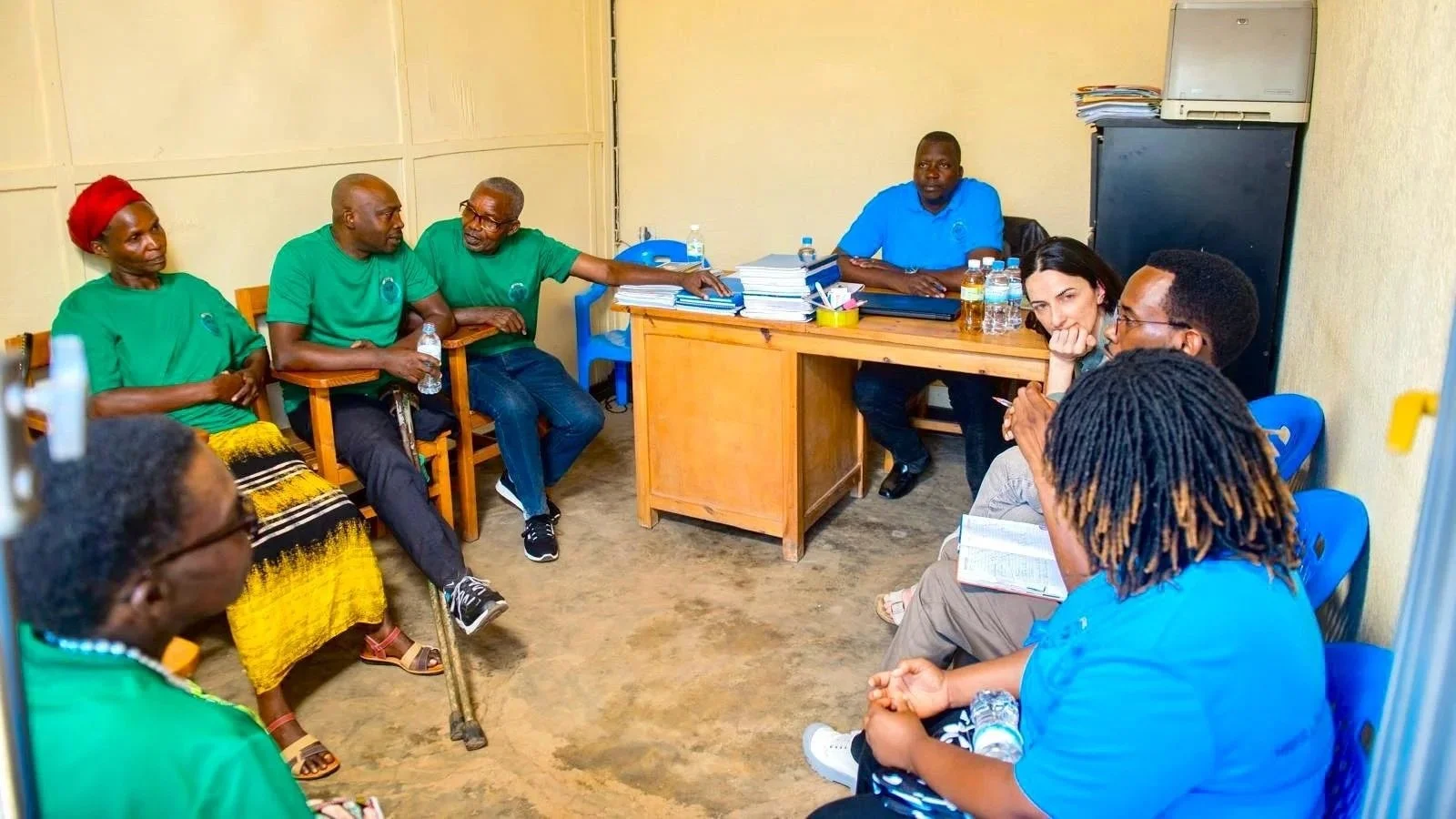
Visiting paralegals in suburbs of Kigalu with Rwanda Youth Forum Human Rights Organization
A year ago, I arrived in Kigali with a bike, 30kg of kit, and a list of local organisations to connect with. It marked the beginning of a journey across Sub-Saharan Africa, but the first week in Rwanda set a benchmark that continued to shape how I interpreted what I saw elsewhere.
Over a series of conversations with organisations including Centre Marembo, Rwanda Youth Forum Human Rights Organization, Rwanda Men's Resource Centre, Akazi Kanoze Access, and Learn Work Develop Rwanda, a consistent pattern emerged. These were organisations working across gender-based violence, youth empowerment, education, and human rights, many founded in response to gaps experienced first hand within communities.
While their mandates varied, what stood out was not only what they were doing, but how they were positioned within the broader system.
Beyond delivery: structured engagement
In many contexts, civil society organisations operate primarily as implementers. Their role is to deliver programmes, often designed elsewhere, within constrained funding and reporting frameworks. Engagement with government, where it exists, is frequently ad hoc or mediated through donor-led processes.
Rwanda presents a different model.
There are formalised structures through which civil society can engage beyond delivery. Platforms such as the Joint Action Development Forum, alongside district-level planning mechanisms and sectoral engagement with ministries, provide entry points for organisations to contribute insights from implementation into wider discussions.
These are not purely consultative spaces. They are designed to coordinate activity, align priorities, and, in some cases, influence how programmes are shaped and adapted.
The result is a shift in function. Civil society is not only delivering programmes but participating, to varying degrees, in shaping them.
Systems shaped through reconstruction
Understanding how these structures came to exist requires looking at Rwanda’s recent history.
Following the Rwandan Genocide, the country faced the task of rebuilding its institutions, governance systems, and social fabric from the ground up. This process created a rare policy environment: one in which systems were not simply reformed, but redefined.
In this context, the role of civil society was not left to evolve informally. Instead, it was progressively structured through:
Clear legal and regulatory frameworks governing NGO registration and operation
Decentralised governance models that place planning and coordination at district level
Institutionalised platforms for coordination between government, civil society, and development partners
Alignment mechanisms linking organisational activity to national development priorities
These systems do not eliminate tensions. They can introduce constraints, particularly around flexibility and autonomy. However, they do create a level of clarity around how civil society engages with government that is less common in many other contexts.
From implementation to policy influence
One of the more subtle outcomes of this structure is how it shapes the relationship between implementation and policy.
Across sectors such as education, youth, and gender, many approaches are initially piloted or delivered by civil society organisations. Through structured engagement mechanisms, elements of this implementation experience can feed into broader policy discussions.
This does not imply direct or linear influence. Rather, it reflects a system in which:
Community-level insights are more likely to be surfaced through formal channels
Implementation challenges can be raised within coordination structures
Practical learning from programmes has a pathway, however imperfect, into policy and planning processes
In this sense, policy is not only designed centrally but is, at least in part, informed by how programmes operate in practice.
Persistent constraints
Many of the organisations engaged remain constrained by limited and often unpredictable funding. This affects their ability to scale, sustain, and consistently engage in the very platforms designed to include them.
Alongside this, organisations are navigating a broader set of constraints. Financially, many remain heavily dependent on a small number of international donors, with limited capacity to diversify funding sources or navigate complex application processes. Short funding cycles, combined with misalignment between donor priorities and locally identified needs, further constrain long-term planning.
A reference point, not a blueprint
Rwanda’s model is not universally replicable, nor is it without critique. However, it offers a useful reference point.
Across other countries in Sub-Saharan Africa, elements of civil society engagement exist, but are often less formalised, less consistent, and more dependent on relationships or external actors.
What Rwanda illustrates is not simply stronger engagement, but more deliberately structured engagement.
And that distinction matters.
Because the extent to which civil society can influence policy is not only a function of capacity or intent, but of the systems within which it operates.
